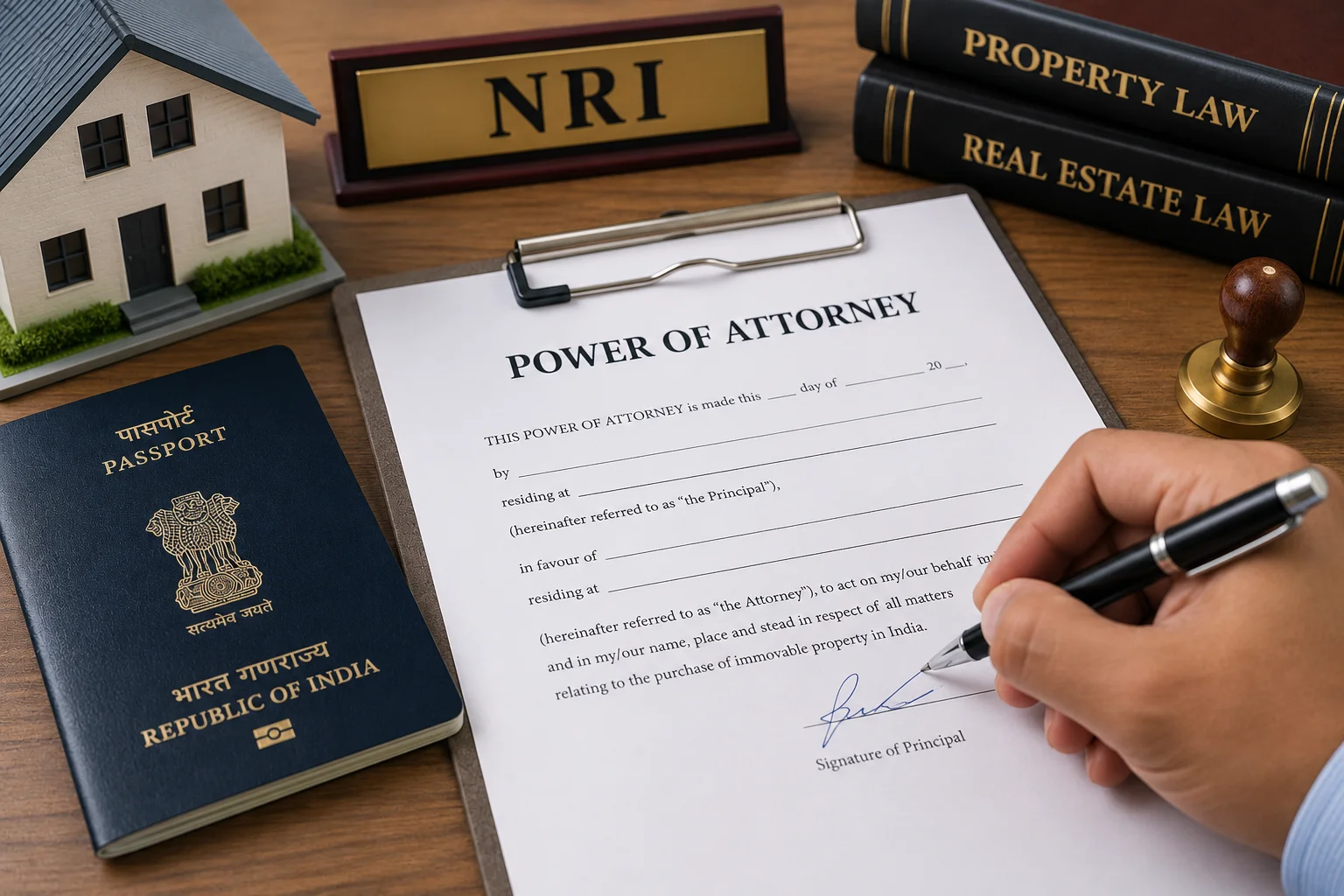
Documents Required for NRI Property Purchase in India in 2026
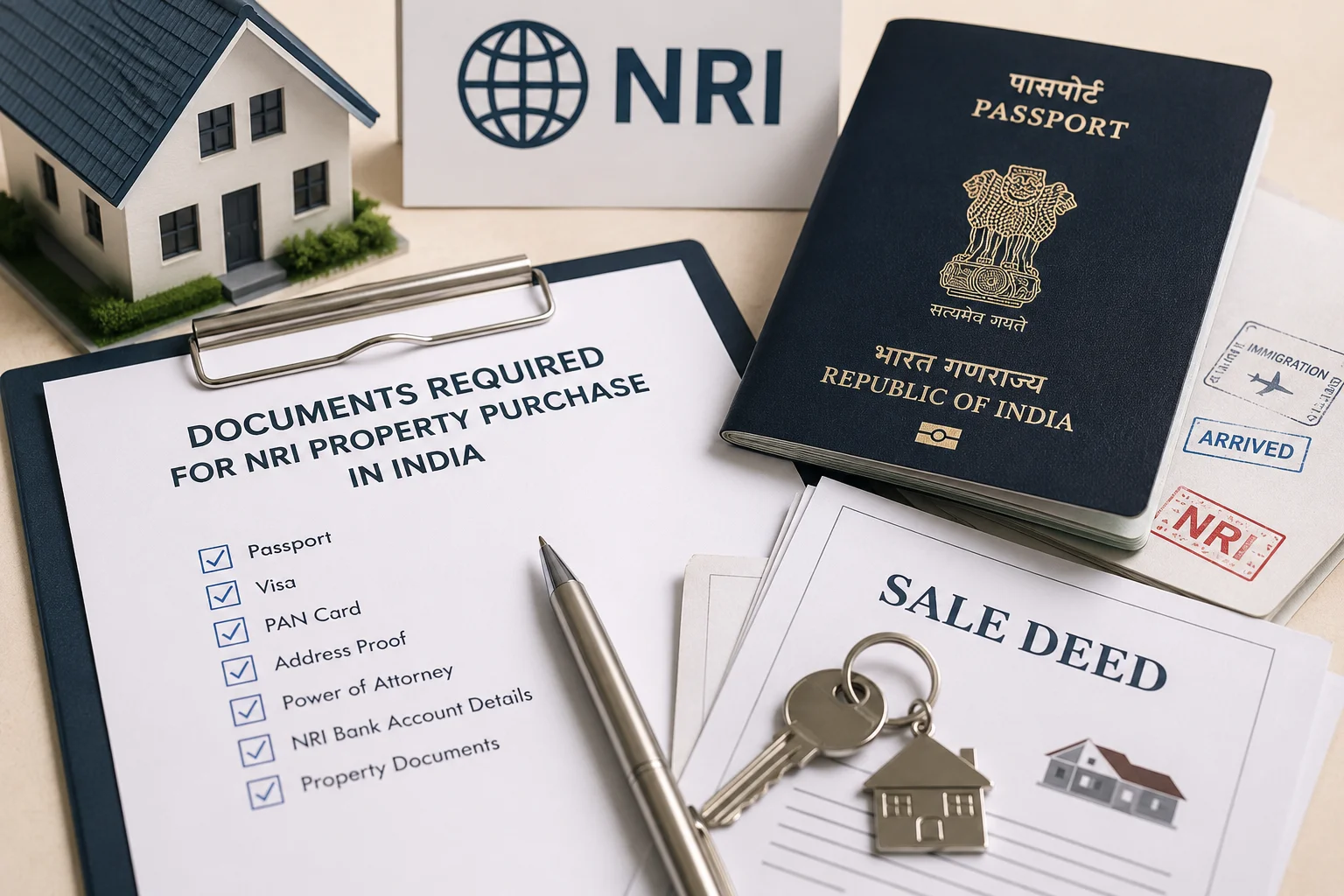
An NRI buying property in India needs documentation across four categories: identity, banking, tax, and project-specific. Most requirements are standard across countries; some vary by consulate. The list below covers the most common purchase scenario in 2026.
Identity and address
- Indian passport, current and any prior expired version showing prior addresses.
- Overseas residence proof — usually a utility bill or government-issued document.
- Indian PAN card, mandatory for any property transaction over ₹50 lakh.
- OCI card if applicable.
- Two passport-size photographs.
For NRIs without a current PAN, application takes two to four weeks remotely.
Tax
- Indian PAN.
- Tax Residency Certificate from the country of residence, for DTAA claims where applicable.
- Last two years’ Indian tax returns if any India-side income exists.
Banking
- NRE or NRO account with an Indian bank — mandatory for any FEMA-compliant property purchase.
- Source-of-funds documentation showing where the purchase capital originates.
- For high-value transactions, a foreign-bank statement showing the transferring account.
NRE/NRO accounts can be opened remotely with most major Indian banks. The process typically takes one to four weeks.
Power of Attorney
Required if the buyer is not visiting India for registration:
- Property-specific PoA executed at an Indian consulate or embassy.
- Apostilled or attested as required by the country.
- Translated if executed in a non-English language.
The PoA must name the project and unit where known, and specify the scope of authority. Generic open-ended PoAs are increasingly refused.
Project-side documents
The buyer should obtain from the developer:
- RERA registration certificate.
- Title documents — sale deed of the developer’s own purchase and master title to the project land.
- Encumbrance certificate, typically covering thirty years.
- Approved building plan.
- Completion certificate (for completed units).
- GST invoices for all amounts paid.
Registration day
- Original sale deed executed by both parties.
- Stamp duty paid receipts.
- Registration fee paid receipts.
- Photo identity, Indian and overseas.
- PAN card.
- Two witnesses with their identity proofs.
- PoA holder’s identity if registering via PoA.
Post-handover documents to retain
- Registered sale deed (original).
- Completion certificate.
- Possession letter.
- Final receipt from developer.
- Tax payment receipts (stamp duty and registration).
- Society or owners’ association membership document.
These should be stored both digitally and physically. Many buyers also leave a copy with the PoA holder in India
Frequently asked questions
How long does it take to assemble all documents?
Two to six weeks if starting fresh. The timeline is usually driven by NRE/NRO account opening and PoA consulate scheduling.
Can my CA handle most of this?
A CA familiar with NRI transactions can co-ordinate most of the process except in-person consulate appointments and registration.
Is a PAN card mandatory?
Yes, for most property transactions and tax compliance requirements.