NRI Power of Attorney for Property Purchase – How It Works 2026
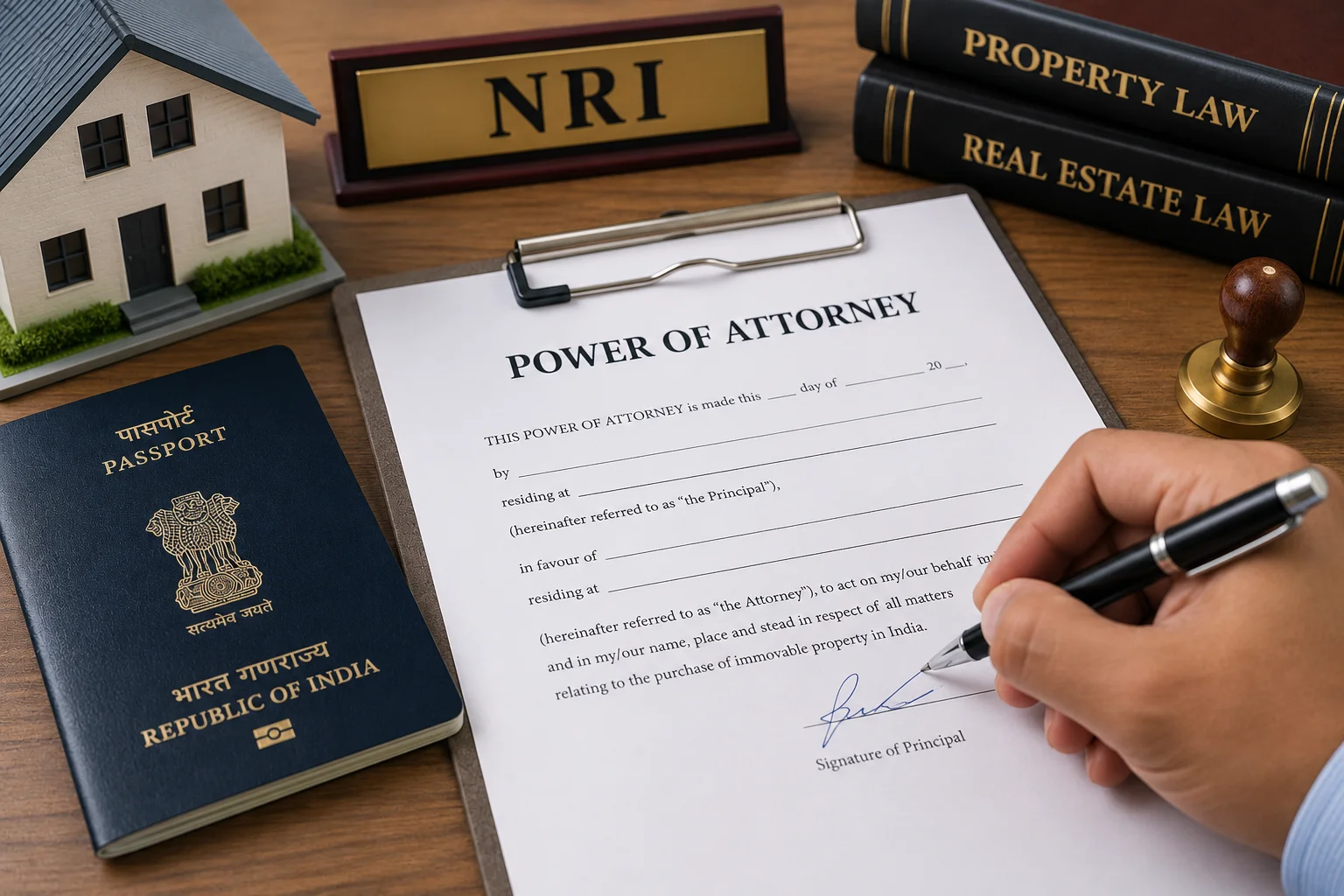
A Power of Attorney is the standard mechanism for NRIs to complete property transactions in India without being physically present. Indian sub-registrars now require a property-specific PoA, executed at an Indian consulate abroad, naming the project and the scope of authority. Generic open-ended PoAs are increasingly refused.
Why a PoA is the standard mechanism
Indian property transactions require physical presence at the sub-registrar’s office for registration. Most NRIs cannot align travel with the registration date. A PoA delegated to a trusted person resident in India solves this.
General PoA versus Special PoA
General PoA: broad authority covering many actions. Faster but increasingly refused at sub-registrars.
Special PoA: narrowly drafted for a specific transaction. Names the property, lists the actions, and has a defined validity period.
For property purchase, a Special PoA is generally the preferred option.
Where to execute the PoA
Two paths exist.
First, the Indian consulate or embassy in the country of residence. The buyer schedules an appointment, attends with the draft PoA, identity proof, and fee. The consulate attests the document.
Second, an in-person India visit. The buyer drafts and signs the PoA in India before a notary or sub-registrar.
For NRIs in Canada, the UAE, the UK, the US, and Australia, the consulate route is usually more practical.
What the PoA must specify
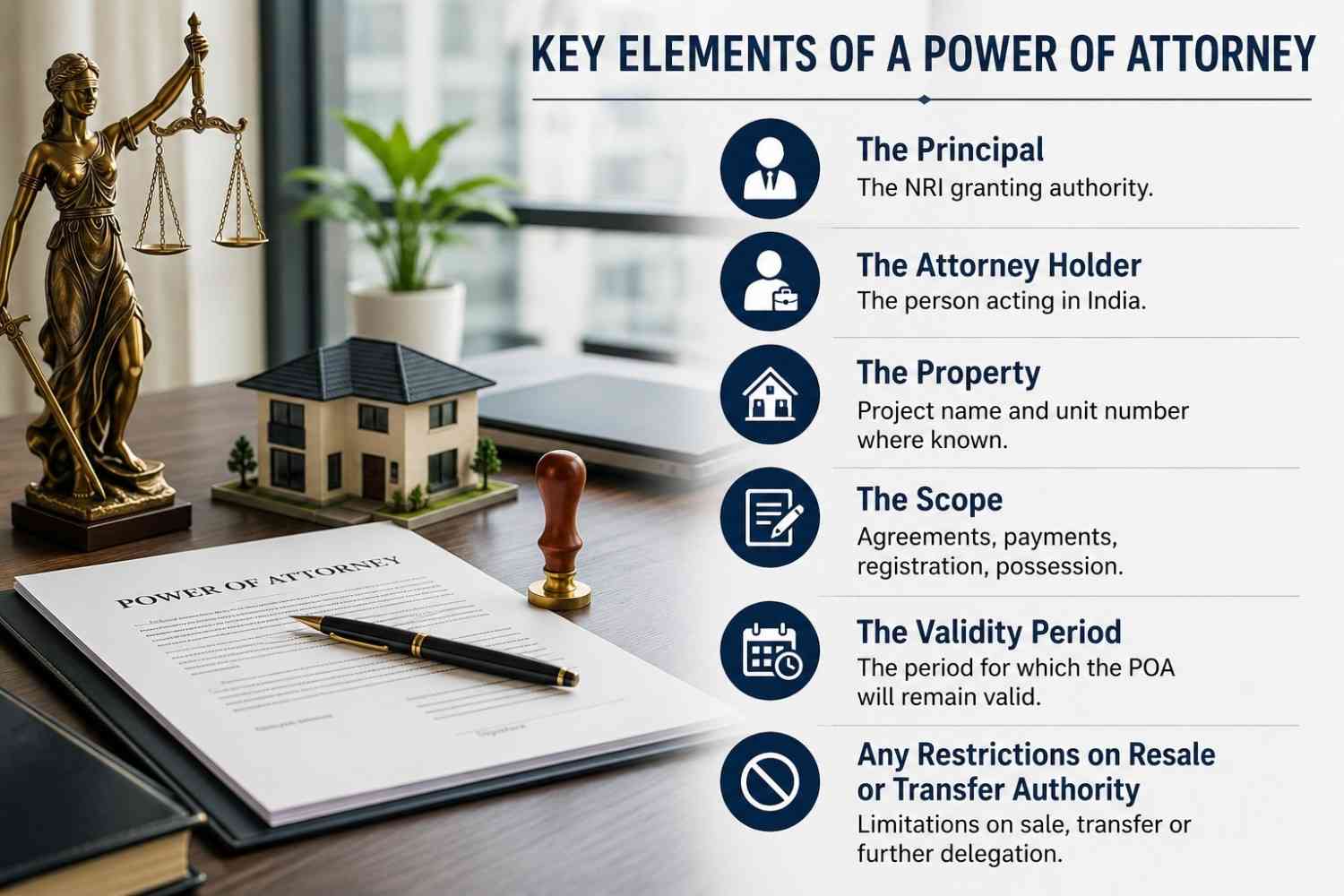
- The principal — the NRI granting authority.
- The attorney holder — the person acting in India.
- The property — project name and unit number where known.
- The scope — agreements, payments, registration, possession.
- The validity period.
- Any restrictions on resale or transfer authority.
The more specific the document, the smoother the registration process tends to be.
Apostille or attestation requirements
Requirements differ by country.
Hague Apostille countries (Canada, UK, US, Australia, most of Europe): Apostille requirements may apply based on local procedures and Indian registration requirements.
UAE: additional attestation procedures typically involve UAE authorities and the Indian Embassy or Consulate.
Requirements should always be verified immediately before execution because procedures can change.
Common mistakes
- Using a generic PoA.
- Allowing the PoA to expire before registration.
- Choosing a PoA holder who cannot attend registration.
- Failing to clearly identify the property.
- Missing required attestation or translation requirements.
A practical example
A Canadian-based NRI buyer:
- Drafts a property-specific PoA with assistance from a CA or legal adviser.
- Schedules an appointment at the Indian Consulate in Toronto.
- Attends with identity documents and witnesses if required.
- Receives the attested PoA.
- Sends the original to the designated attorney holder in India.
- The attorney holder completes registration at the local sub-registrar’s office.
The entire process generally takes a few weeks when documentation is prepared in advance.
Frequently asked questions
Can a PoA be revoked?
Yes. The principal can revoke it through the prescribed legal process.
What happens if the PoA expires before registration?
A new PoA may need to be executed. Validity should extend beyond the expected registration timeline.
Can a family member act as PoA holder?
Yes. Family members are often chosen because of trust and availability.