Kasauli Green Reserve

Can NRIs Buy Property in Himachal Pradesh in 2026?
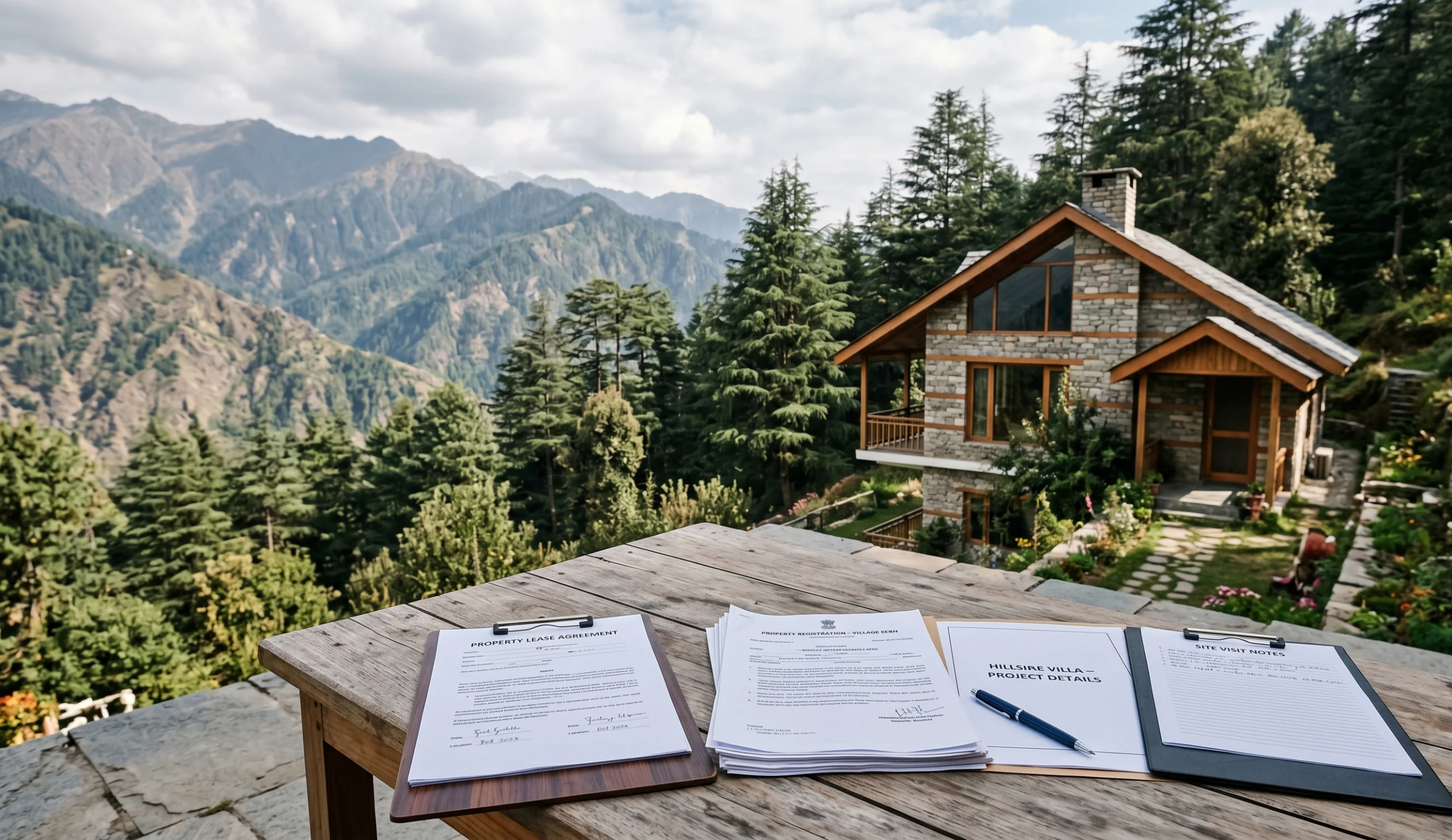
NRI Purchase

Yes, NRIs can buy residential property in Himachal Pradesh in 2026. The most direct route is purchasing a completed unit of up to 500 square metres in a RERA-registered residential project. Section 118 of the Himachal Pradesh Tenancy and Land Reforms Act applies. The December 2024 amendment allows this category of purchase, subject to Section 118 approval; the exemption is awaiting formal government notification. Standard FEMA rules apply to the funding.

The short version

An NRI based in Dubai, Toronto, London, Sydney, or anywhere else can purchase a residential villa or apartment in Himachal Pradesh, provided three conditions are met: the project is RERA-registered, the unit is below 500 square metres, and the funding moves through a permitted FEMA channel. The process from agreement to registration typically takes between three and six months. A site visit is preferable but not legally required.

Step 1 — Verify the project

Three things must be checked on the public record before any agreement is signed:

  1. RERA registration. Every legitimate project carries a registration number on the state RERA portal.
  2. Completion status. The 500 sqm exemption applies to completed units.
  3. Title clarity. An encumbrance certificate from the local sub-registrar’s office, ideally for the past thirty years, is the minimum due diligence.

Step 2 — Choose the funding pathway

FEMA permits NRIs to fund Indian property purchases through three channels: direct remittance from abroad, NRE account, or NRO account. NRE funds are repatriable; NRO repatriation is subject to annual limits.

For NRIs planning to eventually repatriate sale proceeds, NRE funding at the time of purchase simplifies the eventual exit.

Step 3 — Power of Attorney

If not visiting in person, an NRI grants a registered Power of Attorney to a trusted person — typically a family member already resident in India. The PoA must be executed at an Indian consulate abroad, or in India during a visit. It must specify the property and the scope. Generic PoAs are increasingly refused at sub-registrars.

Step 4 — Sale agreement and TDS

Three things in the sale agreement matter most for an NRI buyer: the total consideration broken into components; the handover clause and any associated penalty for delay; the TDS provision. A chartered accountant familiar with NRI transactions should review the agreement before signing.

Step 5 — Registration

Property registration in India happens at the local sub-registrar’s office. For Kasauli, that office is in Solan. The buyer or PoA holder must be physically present, with original identity documents, the executed sale deed, the prescribed stamp duty paid, and the registration fee paid. Stamp duty in HP has been in the range of five to eight per cent of consideration in recent years; confirm rates immediately before registration.

Step 6 — Possession and post-handover

Possession is taken on the date specified in the agreement, against payment of any final balance. A formal handover note, signed by both parties, is the standard practice. Post-handover obligations include annual property tax, maintenance charges, and tax on any rental income.

Common mistakes
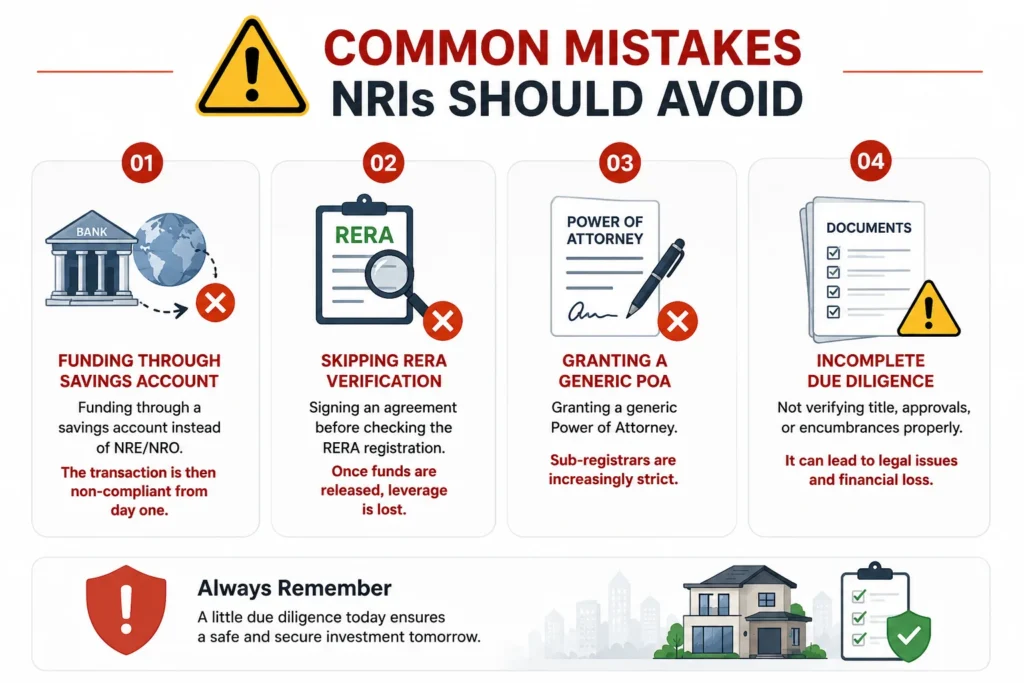
  1. Funding through a savings account instead of NRE/NRO. The transaction is then non-compliant from day one.
  2. Signing an agreement before checking the RERA registration. Once funds are released, leverage is lost.
  3. Granting a generic PoA. Sub-registrars are increasingly strict.

How long does the full process take?

Three to six months from initial enquiry to registered ownership is typical. Two months is achievable when documentation is ready from the outset.

How does Vamika Builders handle this?

Kasauli Green by Vamika Builders is RERA-registered. Each unit is sized within the Section 118 framework. The Vamika sales team works with NRI buyers in Dubai, Canada, the United Kingdom, the United States, and Australia, and provides a project-side dossier covering RERA, title, and tax structure.

Frequently asked questions

Can NRIs buy property in Himachal Pradesh without permission?
Section 118 applies. The current framework allows purchase of completed units under defined limits, subject to approval and pending final notification clarity.

What is the safest way to fund the purchase?
NRE or NRO accounts under FEMA rules. Direct remittance also works if structured correctly.

Do I need to visit India?
Not mandatory. A Power of Attorney can complete the process.

NRI Investment Guide – Buying Property in Himachal from Canada

Canada NRI

NRIs based in Canada can buy completed residential property of up to 500 square metres in RERA-registered Himachal Pradesh projects. Section 118 applies. The December 2024 amendment created the current framework for such purchases, subject to Section 118 approval; the exemption is awaiting formal government notification. Funding moves through NRE or NRO accounts. Power of Attorney is executed at an Indian consulate. The full process takes three to six months end to end.

Why Canadian NRIs are looking at Himachal

Three things drove the volume increase in 2025 and 2026. First, the December 2024 Section 118 amendment created a cleaner RERA-led pathway for non-Himachali residential purchase. Second, the Punjabi corridor between Canada and the Tricity has decades of family ties – many Canadian-Punjabi households have parents or siblings already in the Chandigarh region, and a Kasauli-area home becomes a shared base. Third, the Canadian dollar has held its purchasing power against the rupee relatively well over the last five years.

The legal framework

NRIs are treated the same as non-Himachali Indians under Section 118. Citizenship is not the variable; land classification is. The December 2024 amendment created the current pathway for completed flats or buildings of up to 500 square metres in RERA-registered projects, subject to approval and pending formal notification clarity. That is the operative pathway for nearly every NRI purchase in 2026.

For Canadian buyers, the practical implication is direct: a villa or apartment under 500 sqm in a project like Kasauli Green by Vamika Builders follows a structured residential purchase pathway under the Himachal framework.

Funding from Canada

Three FEMA-permitted channels: direct remittance from a Canadian bank account, NRE funding, or NRO funding. NRE funding is the cleanest for buyers who eventually plan to repatriate sale proceeds.

The currency conversion timing matters more than buyers usually realise. CAD-INR moves materially over a few months. Buyers who lock conversion at a favourable rate can save several lakhs on a one-crore-plus transaction. An Indian bank with an active NRI desk can structure a forward contract; consult the bank before transferring funds.

Power of Attorney from Canada

The Indian consulates in Toronto and Vancouver execute property-purchase Powers of Attorney for Canadian NRIs. The process requires an in-person appointment, a notarised draft of the PoA, identity proof, and a fee. Most consulates complete attestation within two to three weeks.

The PoA must be specific to the property. Generic, open-ended PoAs are increasingly refused at Indian sub-registrar offices. Name the project, the unit number where known, and the scope of authority.

Tax – Canada-India treaty

Canadian NRIs pay tax in two places, with credit for tax paid in India under the Canada-India Double Tax Avoidance Agreement (DTAA).

In India: stamp duty at registration, annual property tax, and tax on any rental income. In Canada: rental income is reportable to the Canada Revenue Agency. Capital gains on eventual sale are also reportable. The DTAA allows credit for Indian tax paid against the Canadian liability.

A chartered accountant in India and a Canadian tax adviser should both review any specific transaction before completion. Neither alone is enough.

Site visit alternatives

Most Canadian NRIs do at least one site visit during the year of purchase, typically combined with a family trip. For buyers who cannot, three substitutes work: a virtual tour with the project team, a video walkthrough requested from a third-party visit, or a personal video call from the site itself with the sales team.

Common pitfalls Canadian buyers face

  1. Funding via personal Canadian bank without proper NRE/NRO routing – creates compliance issues from day one.
  2. Generic PoA – refused at registration, costs weeks of recovery.
  3. Skipping the encumbrance certificate.
  4. Treating the Indian buying timeline as if it runs on Canadian conveyancing speed.

How Vamika Builders handles Canadian buyers

Kasauli Green by Vamika Builders works with Canadian NRI buyers through a structured documentation process. The project-side dossier covers RERA registration, title, planning approvals, completion certificates where applicable, and the FEMA-compliant payment structure. The team can co-ordinate with the buyer’s CA in India and tax adviser in Canada.

FAQs

Can a Canadian-passport-holding OCI buy property in India?
Yes. OCI cardholders are treated similarly to NRIs for residential property purchase under the applicable framework.

What are the typical Canadian NRI buyer profiles for Kasauli?
Most fall into three groups: Punjabi-origin families with parents or siblings in the Chandigarh region; second-generation Indo-Canadians considering eventual return; and retirees building a winter base.

How long does the full process take?
Three to six months for completed-unit purchases. Four months is a realistic median.

NRI Investment Guide – Buying Property in Himachal from UAE

UAE NRI

NRIs based in the UAE can buy completed residential property of up to 500 sqm in RERA-registered Himachal Pradesh projects. Section 118 applies. The December 2024 amendment created the current framework for such purchases, subject to Section 118 approval; the exemption is awaiting formal government notification. Funding moves through NRE or NRO channels. PoA is executed at the Indian Consulate in Dubai or the Embassy in Abu Dhabi. The process takes three to six months.

The UAE-India NRI corridor

UAE-based NRIs are one of the largest contributors to Indian real-estate inflows by both volume and frequency. The Dubai-Indian community is significant; combined with Abu Dhabi and Sharjah, the region accounts for a meaningful share of NRI residential purchases in any given year. The frequency of travel between the UAE and India makes site visits practical, and proximity reduces the friction of remote completion.

Section 118 and the RERA framework

UAE buyers operate under the same Section 118 framework as any other NRI. The December 2024 amendment created the current pathway for completed RERA-registered units, subject to approval and pending final notification clarity. For boutique projects in Solan district, the structure is relatively straightforward.

Funding from the UAE

Three permitted channels: direct remittance from the UAE bank account, NRE funding, or NRO funding. The UAE-India banking corridor is mature; transfer times are usually two to three working days.

The AED-INR pair has been broadly stable, but small movements on a one-crore-plus transaction still matter. As with any NRI transaction, the bank’s NRI desk should structure the conversion before funds release.

A specific UAE consideration: the source-of-funds documentation may need to satisfy both Indian and UAE compliance frameworks. The UAE has its own AML and beneficial-ownership requirements. A professional review of the funding chain is worth the time.

Power of Attorney from the UAE

The Indian Consulate in Dubai and the Embassy in Abu Dhabi both attest property-purchase PoAs. Appointments are scheduled online; the process is straightforward. The PoA must name the property and the scope of authority. As with all NRI PoAs, generic open-ended instruments are now refused at Indian sub-registrar offices.

Tax

UAE-based NRIs face a different tax position compared to NRIs in Canada, the UK, or the US. The UAE does not levy personal income tax in the same way. Rental income from Indian property is therefore taxed in India under the applicable framework.

Capital gains on eventual sale are taxed in India at the applicable NRI rate. The UAE-India DTAA addresses double taxation. Specific transaction tax planning should run through a CA in India familiar with NRI structures.

Remote completion

The end-to-end process for a UAE buyer can be completed with one site visit and one consulate appointment for the PoA. The remainder – documentation, payment, registration – can run remotely with the PoA holder in India.

For buyers based in Dubai with frequent travel to India, an in-person visit for registration is often easier than the consulate-PoA route. Both work.

Specific considerations for UAE buyers

The UAE-Indian community researches second-home purchases through specific channels: the Khaleej Times property section, India-side broker networks based in Dubai, and word-of-mouth in resident-Indian forums. The actual due diligence – RERA, title, completion – happens through the standard Indian process regardless of how the buyer initially encounters the project.

UAE buyers are often comparing multiple Indian options simultaneously: a Dubai-based property, a Mumbai or Delhi flat, and a hill-station second home. The decision usually comes down to use case, not headline yield.

How Vamika Builders handles UAE buyers

Kasauli Green by Vamika Builders follows a structured NRI process. A project-side dossier covers RERA registration, title, FEMA structure, completion timeline, and the post-handover service framework. The Vamika team has experience working with UAE-based buyers across multiple projects.

FAQs

Does a UAE-based NRI need a Tax Residency Certificate for the India transaction?
Sometimes — for DTAA relief. A UAE TRC usually takes a few weeks to obtain through the UAE Ministry of Finance.

Can I buy in the joint name of two NRIs?
Yes. Both must comply with FEMA requirements and tax obligations.

How long is a typical UAE-NRI Kasauli purchase?
Three to four months from agreement to registered ownership is a realistic timeline.